
Uncategorized
Electric Vehicles for Sustainable Transportation | Modern EV Solutions
May
Electric vehicles are transforming the future of transportation by providing cleaner, smarter, and more energy-efficient mobility solutions. As the global demand for sustainable transportation continues to grow, electric vehicles are becoming one of the most important innovations in the automotive industry. From electric cars and buses to scooters and commercial fleets, EV technology is helping reduce carbon emissions, lower fuel dependency, and create environmentally responsible transportation systems.
Modern electric vehicles are powered by rechargeable battery systems instead of traditional internal combustion engines. This allows EVs to operate with significantly lower emissions while delivering smooth, quiet, and efficient performance. Electric vehicles are widely recognized for their environmental benefits, advanced technology, and lower operating costs, making them an increasingly popular choice among consumers and businesses worldwide.
One of the biggest advantages of electric vehicles is sustainability. Unlike gasoline or diesel-powered vehicles, EVs produce zero tailpipe emissions, helping improve air quality and reduce environmental pollution. As governments and industries focus more on climate change and clean energy solutions, electric mobility is playing a major role in supporting global sustainability goals. EV adoption helps reduce greenhouse gas emissions while promoting greener urban environments and cleaner transportation systems.
Electric cars are among the fastest-growing segments in the automotive market. Modern EVs are designed with advanced battery technology, intelligent software systems, and high-performance electric motors that deliver excellent acceleration, reliability, and energy efficiency. Many electric vehicles now offer long driving ranges, fast charging capabilities, and smart connectivity features that improve convenience and driving experiences for users.
EV charging infrastructure is also expanding rapidly to support the growing number of electric vehicles on the road. Public charging stations, home charging systems, and fast-charging networks are making electric mobility more accessible and practical for everyday use. Smart charging technology allows users to monitor charging status, manage energy consumption, and optimize charging schedules through mobile applications and connected systems.
Battery technology is one of the most important components of electric vehicles. Modern lithium-ion batteries are designed to provide higher energy density, faster charging times, and improved durability. Advancements in battery innovation continue to increase vehicle range, improve efficiency, and reduce charging time, making electric vehicles more practical for long-distance travel and daily commuting.
Electric vehicles also offer significant economic benefits. EV owners can save money on fuel, maintenance, and operating costs compared to traditional fuel-powered vehicles. Electric motors have fewer moving parts than internal combustion engines, resulting in lower maintenance requirements and reduced servicing expenses. Many governments also provide tax incentives, rebates, and subsidies to encourage EV adoption and support sustainable transportation initiatives.
Smart technology integration is another major feature of modern electric vehicles. Many EVs are equipped with advanced digital dashboards, autonomous driving assistance systems, artificial intelligence, and mobile connectivity features. Drivers can access navigation systems, battery monitoring tools, remote controls, and software updates directly through smartphone applications and integrated vehicle systems. These innovations improve safety, convenience, and overall driving efficiency.
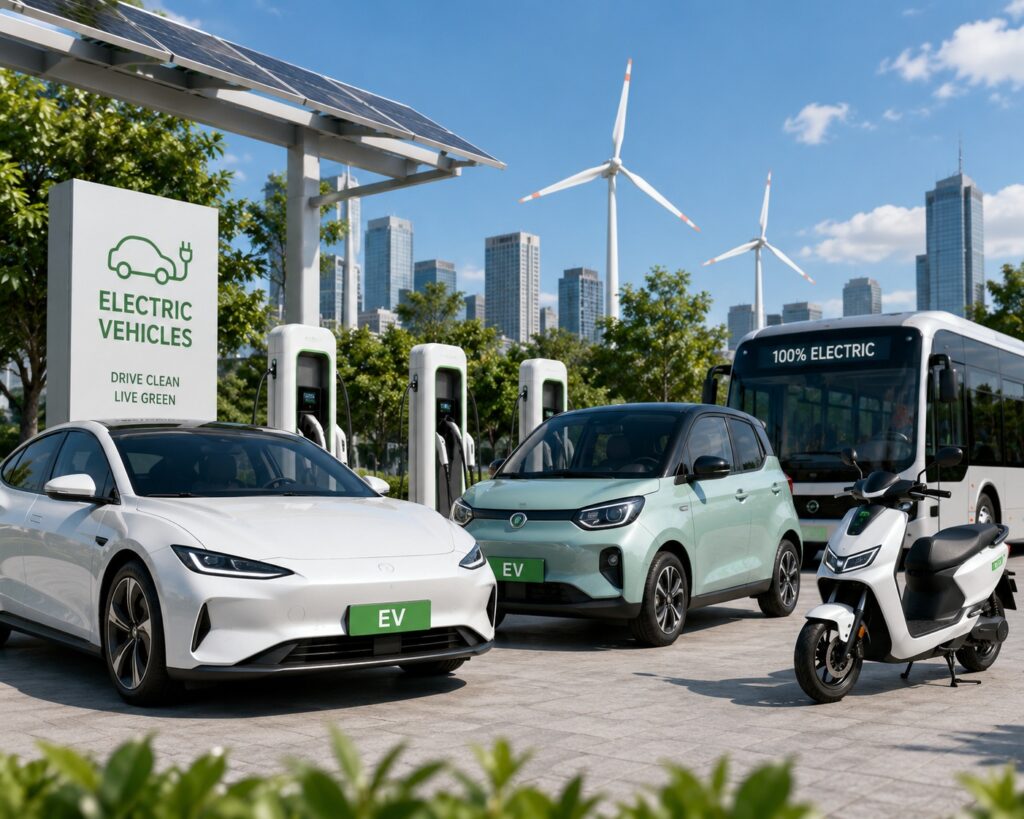
Electric buses and commercial EV fleets are also becoming increasingly popular in public transportation and logistics industries. Electric public transport systems help reduce urban air pollution while lowering operating costs for transportation providers. Commercial electric delivery vehicles support sustainable logistics operations by reducing fuel expenses and minimizing environmental impact.
Electric scooters and smaller EVs are contributing to urban mobility solutions in cities around the world. Compact electric transportation options provide convenient, energy-efficient alternatives for short-distance travel and daily commuting. Electric scooters are especially popular in urban environments where traffic congestion and environmental concerns continue to increase.
Renewable energy integration is another important aspect of electric vehicle development. Many EV charging systems now use solar power and renewable energy sources to reduce environmental impact further. Solar-powered charging stations and smart energy management systems support cleaner transportation ecosystems and contribute to energy sustainability.
Safety and performance remain top priorities in electric vehicle design. Modern EVs are equipped with advanced safety technologies such as collision detection systems, lane assistance, automatic emergency braking, adaptive cruise control, and intelligent driver support systems. These features improve road safety while enhancing driver confidence and comfort.
The future of electric vehicles continues to evolve with ongoing advancements in automation, artificial intelligence, and battery innovation. Autonomous driving technology, wireless charging systems, and ultra-fast charging infrastructure are expected to shape the next generation of electric mobility solutions. Manufacturers worldwide are investing heavily in EV research and development to improve efficiency, sustainability, and driving experiences.
Businesses are also increasingly adopting electric vehicle fleets to support environmental responsibility and reduce operational costs. Companies using electric transportation solutions can improve sustainability initiatives while enhancing brand reputation and reducing fuel-related expenses. EV fleets are becoming common in delivery services, ride-sharing platforms, and commercial transportation operations.
Consumers choosing electric vehicles are contributing to a cleaner and more sustainable future. EV technology supports reduced environmental impact while offering modern driving experiences, innovative features, and long-term cost savings. As charging infrastructure expands and battery technology improves, electric vehicles are expected to become even more accessible and practical for global transportation needs.
Electric vehicles represent the future of mobility by combining advanced technology, sustainability, and efficiency into modern transportation solutions. Whether for personal use, public transportation, or commercial operations, EVs are helping shape a smarter, cleaner, and more environmentally responsible world.
